

Book an intro call

What We Freeze in a Shopify Store Four Weeks Before Black Friday

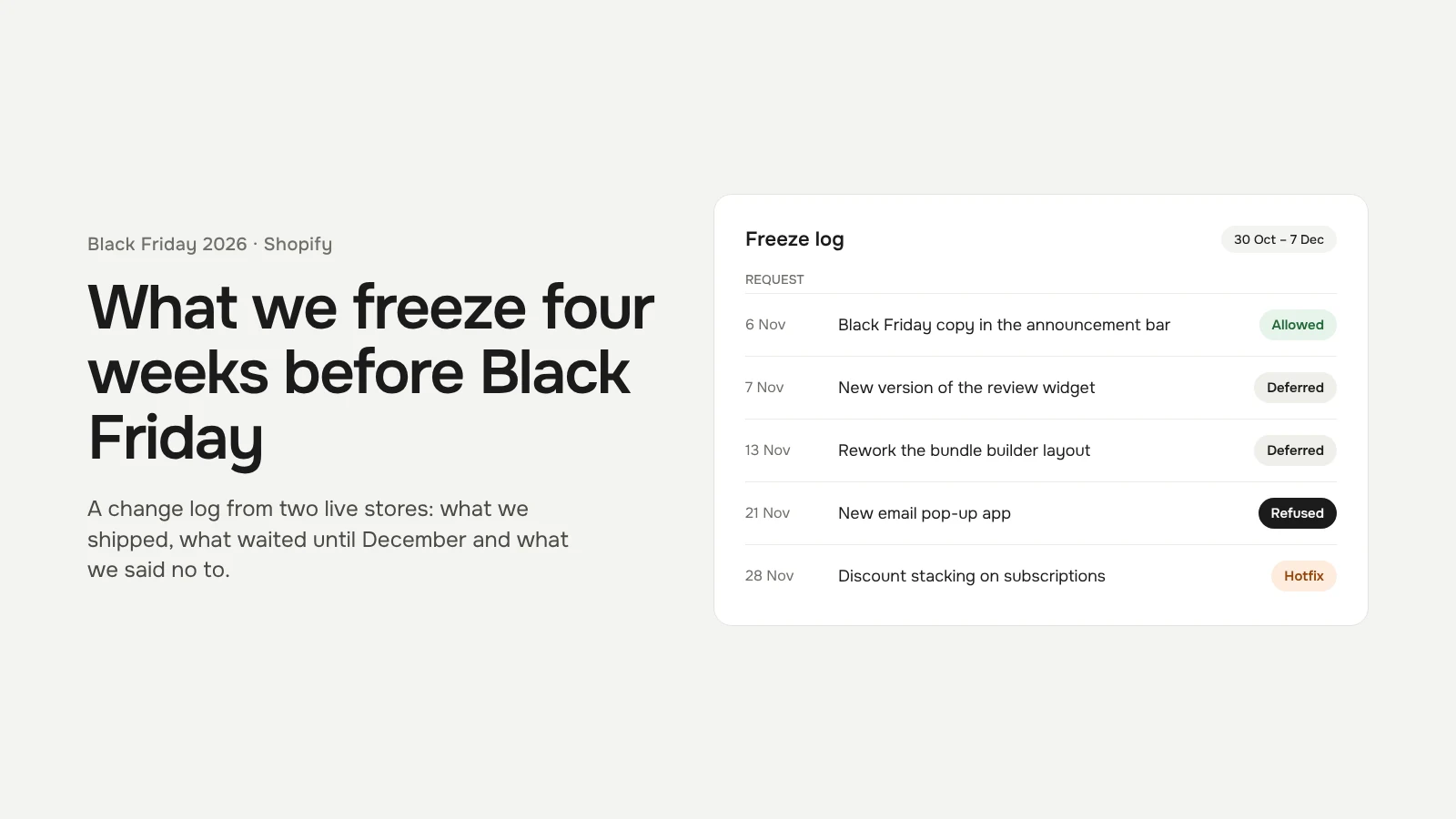
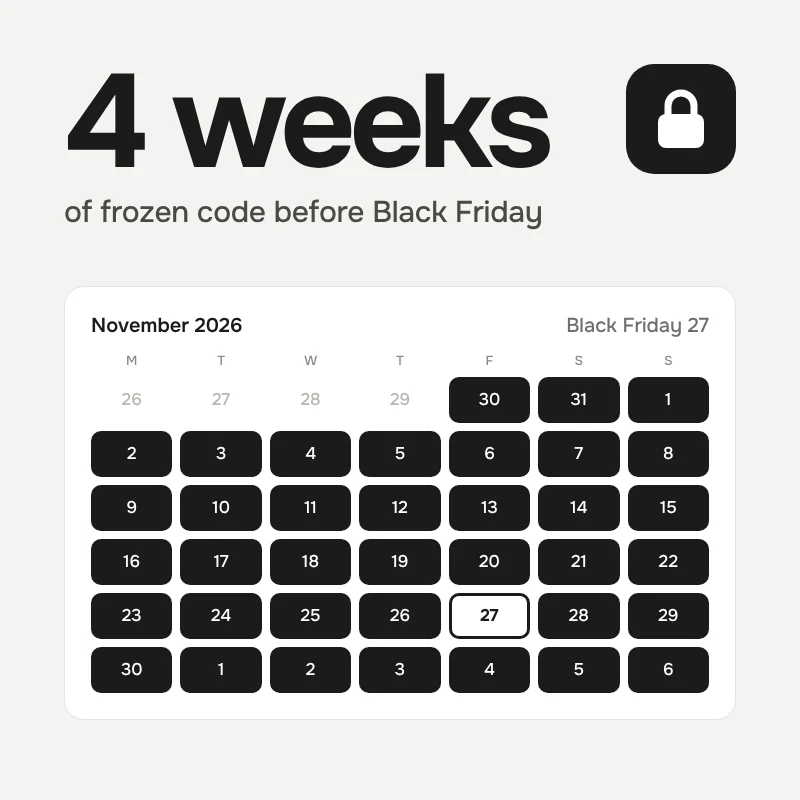
On Friday 30 October we stop shipping code to the Shopify stores we look after. Black Friday falls on 27 November this year and Cyber Monday on 30 November, which leaves four clear weeks in which nothing structural changes on a store that is about to take its biggest orders of the year. Copy, prices, banners and discount codes keep moving. The theme, the apps, the checkout logic and the tracking stay exactly as they were when we last tested them.
I did not always work this way. In November 2023 a client's review app pushed an automatic update on the Thursday before Black Friday. The new widget script loaded ahead of the theme's own JavaScript on mobile, and the add-to-cart button on product pages stopped responding. Nobody on either side had touched the store. It took three hours and forty minutes to find the cause, switch the widget off and get the vendor to ship a fix, on the busiest evening of that brand's year. Since then every store on our retainer goes through the same freeze, and every request that arrives during it goes into a log with a decision next to it.
This article is that log. Below is the version from November 2025 for two of our stores, THRSTY and Ovrload, followed by the six areas we lock, what still changes, how we handle a real emergency and what is different about the platform this year.
The freeze runs from 30 October to 7 December
Four weeks is the time we need for one full round of testing on real phones after the last change, plus a buffer in case that testing finds something. Our final release before the freeze goes out on Tuesday 27 October, which gives us three working days to watch it on live traffic before the door closes. The thaw starts on Monday 7 December, a week after Cyber Monday, once returns and delivery questions have settled down.
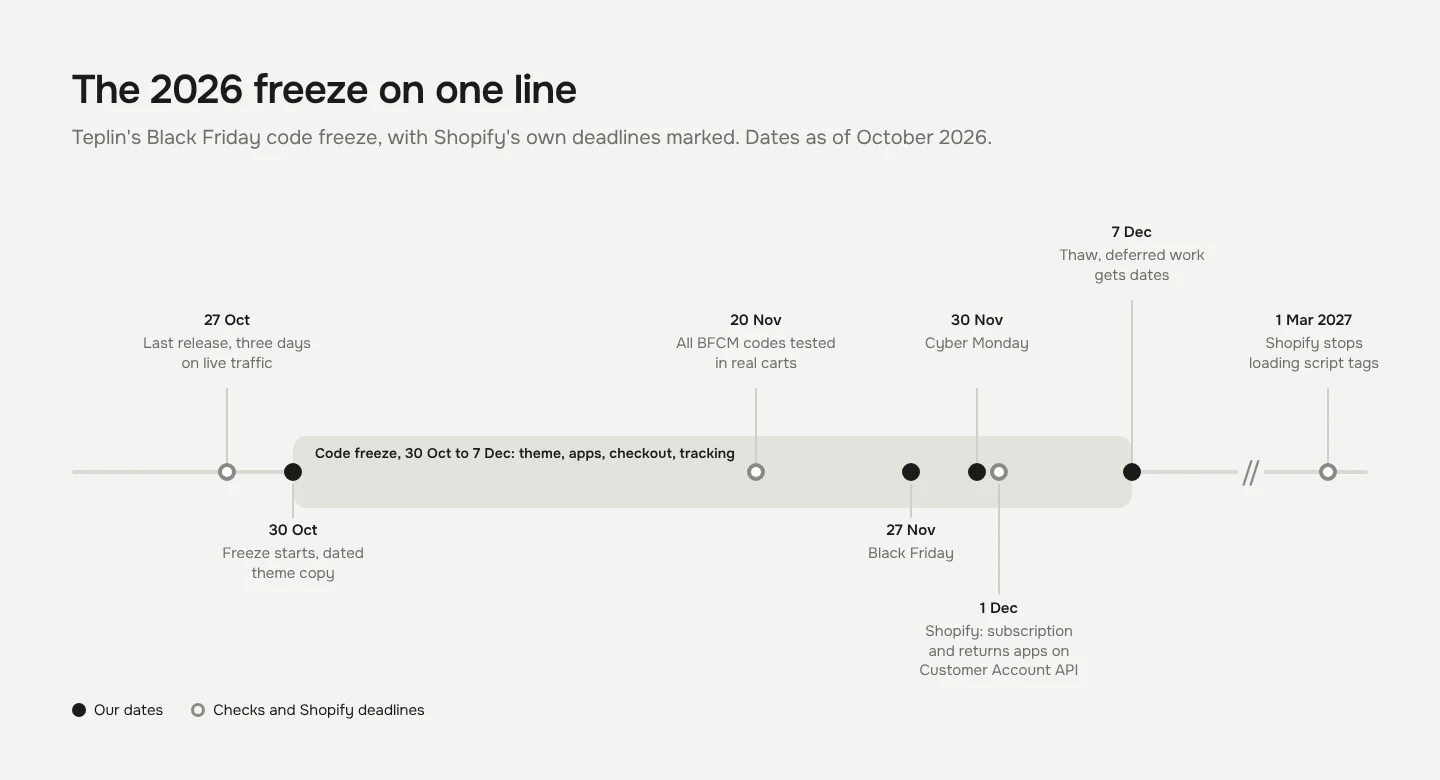
Two dates on that line are Shopify's, not ours: 1 December for returns and subscription apps, and 1 March 2027 for script tags. Both decide which app updates we expect during the freeze.
Every request gets a row and a decision
The log is a shared board with one row per request: the date it arrived, the store, what was asked for and one of five decisions. Shipped means it went out before 30 October. Allowed means it is content or a setting in the admin, with no code involved. Hotfix means something is broken for customers and we fix it with a rollback ready. Deferred means it gets a named date after the thaw. Refused means we do not think it should happen at all.
Between 31 October and 1 December 2025 the two stores raised 31 requests. We allowed 9 of them, two of which were hotfixes, deferred 19 to a date after 7 December and refused 3. Here are twelve entries from that log, in the order they came in, with the decision next to each.
- 3 Nov · Ovrload · Deferred to 12 Jan
Add a six-month supply option to the purchase funnel. A new tier changes selling plans, prices and the funnel's step logic at once. - 4 Nov · THRSTY · Refused
Install a countdown timer app for the Black Friday banner. A new script on every page, and the theme's announcement bar already does the job. - 6 Nov · THRSTY · Allowed
Change the announcement bar to the Black Friday offer. Text in the theme editor, no code. - 7 Nov · Ovrload · Deferred to 8 Dec
Move the review app to its new widget version. The vendor's release notes mentioned a rewritten script. - 10 Nov · Ovrload · Allowed
Restock date and a "back soon" label on a sold-out flavour. Product data and a metafield the theme already reads. - 12 Nov · THRSTY · Allowed
Swap the hero image and headline for Black Friday. Section settings, checked on four phones before saving. - 13 Nov · THRSTY · Deferred to 14 Jan
Rework the bundle builder so the free bottle shows first. Custom code on the page that takes most of the revenue. - 17 Nov · Ovrload · Deferred to 9 Dec
Move GA4 from the Google app to a custom pixel. It would change how this BFCM compares with the last one. - 19 Nov · THRSTY · Allowed
Create the Black Friday code and its combination rules. Built in the admin and tested in real carts on 24 Nov. - 21 Nov · Ovrload · Refused
Add an email capture pop-up app. It would sit on top of step one of the funnel on mobile. - 28 Nov · THRSTY · Hotfix
Black Friday code stacking with the 33% subscription saving. Purchase type setting corrected in the admin within 25 minutes. - 29 Nov · Ovrload · Hotfix
Free cap image missing on step one in Safari. One CSS rule, deployed with a rollback copy of the theme open.
Read down the decisions and the pattern is plain. Almost everything allowed lives in the admin or the theme editor. Almost everything deferred touches code, an app or the way a sale is measured. The three refusals were all new apps.
We lock six areas of the store
Theme code
On the morning of 30 October we duplicate the live theme and name the copy with the date. That copy is the rollback for the next five weeks. From then on nobody edits theme files, ours or the client's, and the theme editor is used only for text, images and settings that sections already expose. If a section cannot do something without new code, the request is deferred.
Apps
No installs, no uninstalls and no plan changes. Uninstalling is riskier than it sounds, because some apps leave code behind in the theme. The harder part is updates, since most apps update themselves and you cannot pin a version. In October we write to the vendor of every app that loads on the storefront and ask whether a release is planned before December.
This year two platform changes make that list longer. Since 1 October 2026 apps can no longer create or update script tags in any API version, and from 1 March 2027 Shopify stops loading them on storefronts at all. An app that still depends on a script tag cannot push a fix through it during BFCM, so we note those apps now and plan their replacement for December. Separately, Shopify requires returns and subscription apps that offer customer self-service to log customers in through the Customer Account API by 1 December 2026 to keep their Built for Shopify status. Expect updates to those apps in the same week as Cyber Monday, and test the subscriber portal again on 1 and 2 December.
Checkout, discounts and Functions
Shopify Scripts stopped running on 30 June 2026, so on Plus stores the discount and shipping logic now lives in Functions. We wrote about that migration separately. During the freeze nobody deploys a new Function or changes an existing one. Discount codes are a different matter: they are created in the admin, but every one of them is tested in a real cart against subscription items, bundles and free shipping before the week of the sale. THRSTY's hotfix in the log above is what happens when one combination slips through.
Tracking
Pixels, GA4, the ad platforms and Customer Events stay exactly as they are. The point of Black Friday data is to compare it with last year, and a change in setup makes that comparison worthless. One platform change already sits inside this year's numbers: since 12 October 2026, cart actions that leave a cart unchanged no longer fire a carts/update webhook. If a tool you use counts cart updates, its figures will be lower this BFCM for a reason that has nothing to do with shoppers.
Shipping, tax and market settings
Offers on a page often promise something the shipping settings have to keep. Ovrload's funnel is a good example. The three-month option, marked most popular, includes free tracked priority shipping, and the subscriber gets a free cap with the third order. If someone edits a shipping profile in November and that promise quietly breaks at checkout, the customer finds out at the worst possible moment.
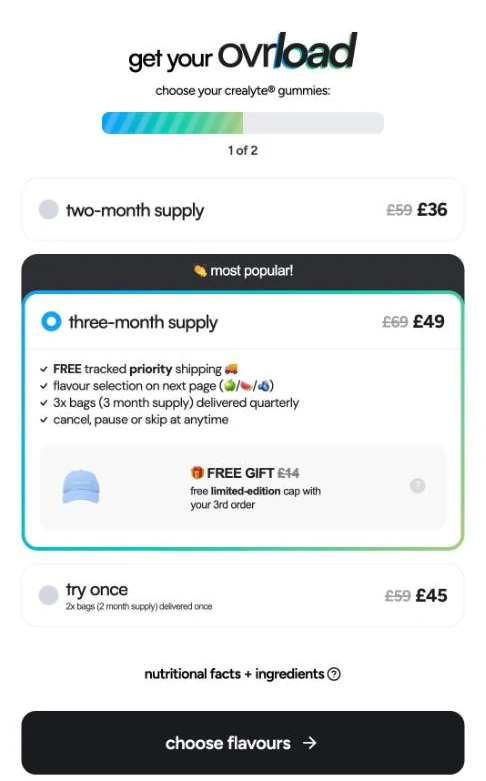
This funnel is also why I am strict about the freeze on Ovrload. After we rebuilt the store as a headless build inside Shopify, its conversion rate went from 2.03% to 4.6%, comparing the six months before launch with the six months after in Shopify Analytics, and average order value rose 32%. Four months of work produced that funnel. It is not something I want anyone touching in November.
Who can get in
On 20 October 2026 Shopify asked app developers to act within the week on security: switch on two-step authentication for every account that touches an app and remove access for anyone who no longer needs it. We do the same for the stores before the freeze. Staff accounts and collaborator access get reviewed, former freelancers come off, and everyone who stays has two-step authentication on.
Content keeps moving during the freeze
A freeze that stops marketing is a freeze nobody respects. Prices, product copy, images, collections, discount codes, inventory, email and SMS campaigns all change as often as the team needs. The rule is only that the change is made in the admin or the theme editor, not in code.
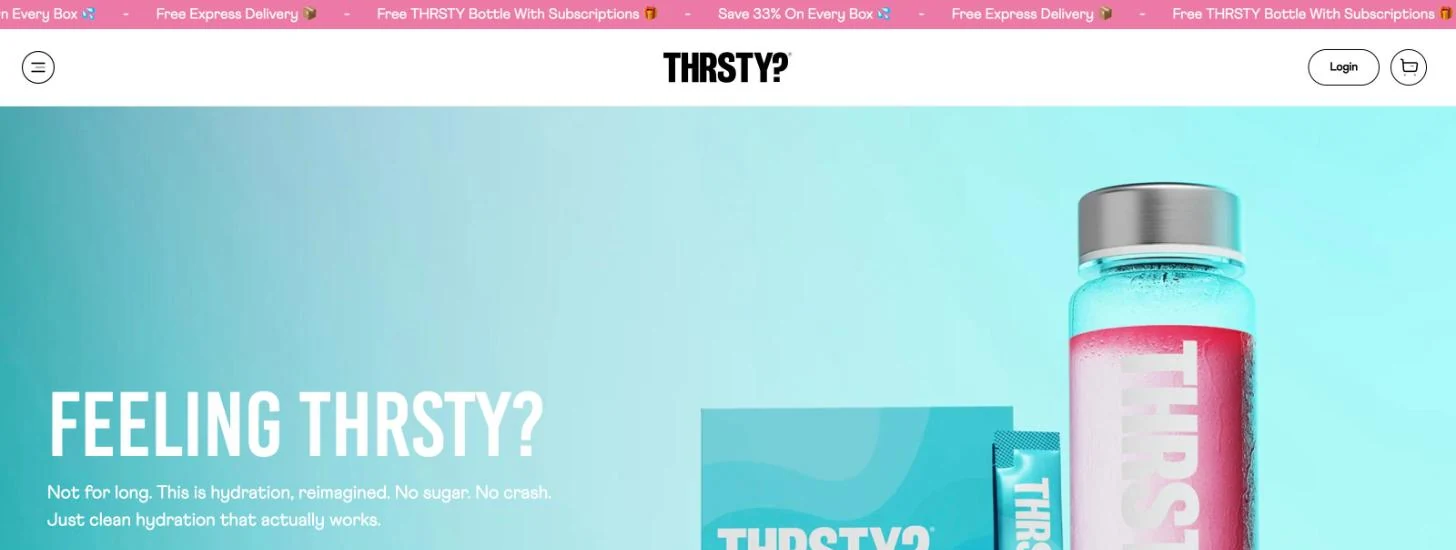
THRSTY's announcement bar is where most of that work happens. As of October 2026 it scrolls through three messages: 33% off every box, free express delivery and a free bottle with subscriptions. During Black Friday week in 2025 the team changed that text four times, from the teaser to the launch, the last-day message and the Cyber Monday extension, and none of those changes needed us. That is how it should be. We built the bar so the offer could change without a developer.
A hotfix needs a rollback and a second person
Something will break anyway, usually because of a setting or an outside change rather than our code. Our rule is that a hotfix must fix something customers can see, must come with a way back, and must be checked by a second person before it goes live. Nick, who runs support on our retainers, puts it this way:
"During the freeze I only ask two questions. Is a customer losing money or an order right now? And can I undo this in under five minutes? If the answer to either one is no, it goes on the December list."
Black Friday 2025 tested that at 07:40 on the Friday. THRSTY's Black Friday code had been set to apply to both one-time purchases and subscriptions, so subscribers got the 33% subscription price and then the Black Friday discount on top. It was a setting, not code. Nick limited the code to one-time purchases in the admin, checked three carts and posted the before and after in the client's channel. The window was 25 minutes and affected 11 orders, which the client chose to honour. The second hotfix, Ovrload's missing cap image in Safari, was one line of CSS, deployed with the dated theme copy ready to publish if anything else moved.
What the freeze cost and what it saved
The 19 deferred requests from 2025 added up to about 64 hours of work, which we scheduled across December and January. At our $60 hourly rate that is roughly $3,840 of work pushed back by five or six weeks. The bundle builder change THRSTY asked for on 13 November went live on 14 January and was tested properly, instead of being rushed into the week it could do the most damage.
On the other side, neither store had an outage or a broken checkout between 30 October and 7 December 2025. THRSTY took 2.6 times its average daily October 2025 order count on Black Friday, on the same theme, apps and tracking it had at the start of the freeze. For a brand that launched 30 days after its brief and passed 1,000 orders in its first month, that week matters more than any single improvement we could have squeezed in.
This year's checklist with dates
- By Tuesday 27 October
Ship the last release and watch it on live traffic for three working days. - Friday 30 October
Duplicate the live theme, name the copy with the date and announce the freeze to everyone with store access. - The same week
List every app that loads on the storefront, ask each vendor about planned releases and note which apps still rely on script tags. - Before the freeze
Review staff and collaborator accounts, remove old access and require two-step authentication. - By Friday 20 November
Create every Black Friday and Cyber Monday code and test it in real carts with subscriptions, bundles and free shipping. - Before 27 November
Write down who can approve a hotfix, how to reach them on Black Friday and Cyber Monday, and where the rollback copy is. - 1 and 2 December
Retest the subscriber and returns portals in case an app update lands with the Built for Shopify deadline. - Monday 7 December
Thaw. Give every deferred request a date, starting with anything that depends on script tags.
Speed problems belong before 27 October, and our Core Web Vitals guide shows where to start. Subscription brands should also check the retention settings in our subscription offer guide before a promotion brings in new subscribers.
Frequently asked questions
How long before Black Friday should a Shopify store stop changing code?
We freeze four weeks before Black Friday, which in 2026 means from 30 October, with the last release on 27 October. Smaller stores with fewer apps can manage with two weeks, but less than that leaves no time to test a fix if the final release breaks something.
Can we still change prices and run promotions during a freeze?
Yes. Prices, products, images, discount codes, collections and campaigns all keep moving. The freeze covers theme code, apps, checkout logic, tracking, shipping and tax settings and access to the store.
What if an app updates itself during the freeze?
You usually cannot stop it, so ask vendors in October whether a release is planned and keep a dated copy of your theme ready. This year, watch subscription and returns apps around 1 December 2026, when Shopify's Customer Account API requirement for Built for Shopify apps takes effect.
Do the script tag changes affect Black Friday 2026?
Not directly. Since 1 October 2026 apps cannot create or update script tags, but existing ones keep loading until 1 March 2027. The risk during BFCM is that an app relying on one cannot ship a fix that way, so list those apps now and replace them after the thaw.
If you would rather someone else kept the log, this is the kind of work our Shopify retainer covers, and when a deferred request needs real development in December, our custom apps and integrations team picks it up. A short note through our contact page is enough to start before 30 October.
Sources
- Shopify.dev changelog – Online store script tags deprecation
- Shopify.dev – Script tag deprecation
- Shopify.dev changelog – Built for Shopify requirements for returns and exchanges and subscription apps
- Shopify.dev changelog – Unchanged carts no longer trigger carts/update webhooks
- Shopify.dev changelog – Securing your app, together
- Teplin case study – THRSTY
- Teplin case study – Ovrload

Get a free Shopify store audit

Stay ahead of the curve

More from our resources
What We Freeze in a Shopify Store Four Weeks Before Black Friday


Ecommerce insights, straight to your inbox


10:33

10:33

16:33