

Book an intro call

AI Shopping Channels Are On by Default. Here Is What That Does to Your Attribution

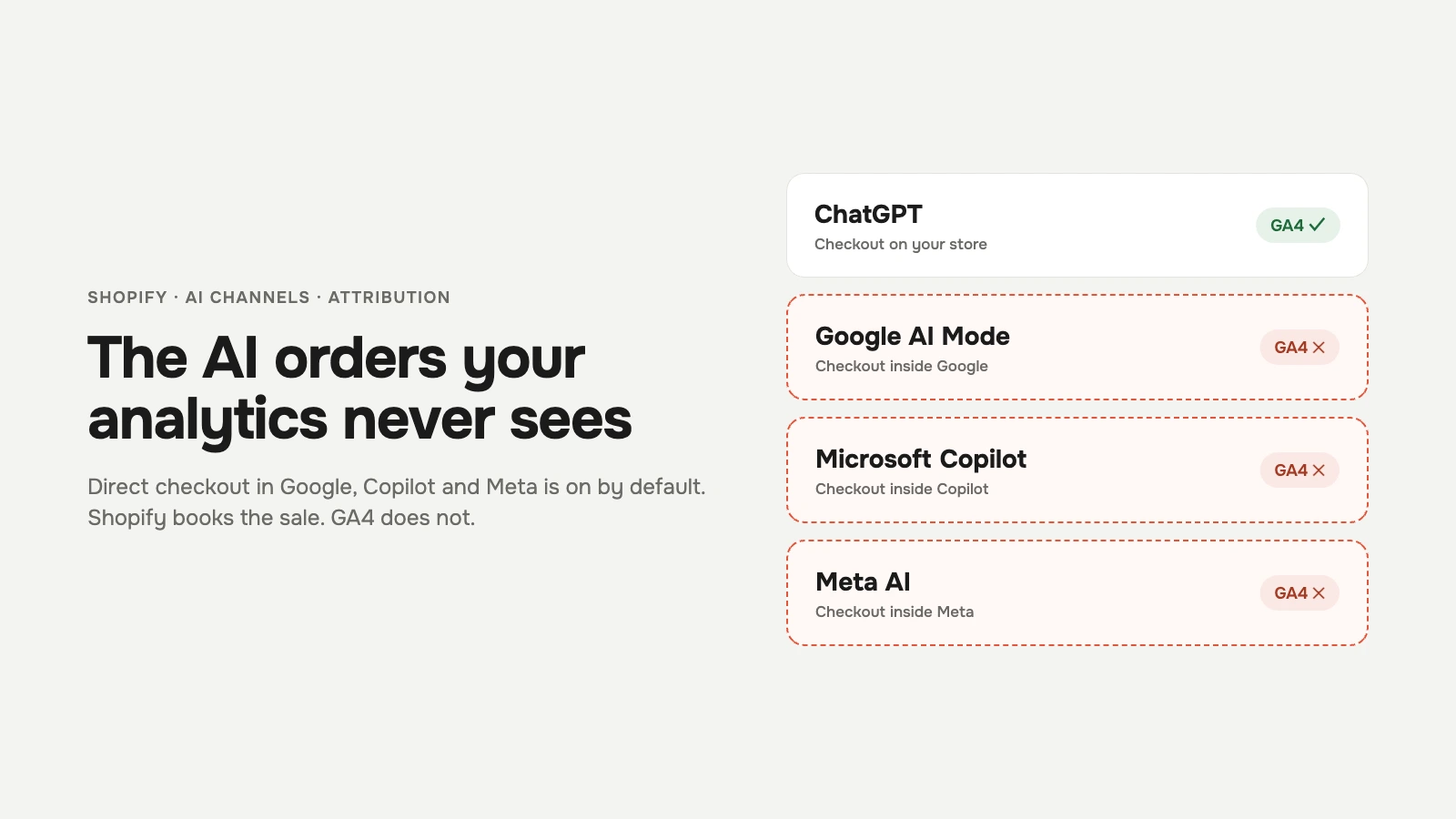
If your Shopify store is eligible, its AI shopping channels are already switched on, and some of the orders they bring will never appear in Google Analytics 4. Orders from ChatGPT land on your own checkout and track like any other referral. Orders that shoppers pay for inside Google AI Mode, Gemini, Microsoft Copilot or Meta's AI go through Shopify's direct checkout, and Shopify's own Help Center says Google Analytics and custom pixels do not fire there. Shopify books the sale. GA4, Google Ads and your Meta pixel never hear about it.
Nothing is broken when this happens. It is how the default works as of November 2026, and it adds a new line to the gap between your Shopify numbers and your GA4 numbers. Below is which orders go where, what that line looked like on one client store in October, and how we report AI orders now.
The channels are on unless someone switched them off
Shopify launched agentic storefronts with its Winter '26 Edition in December 2025. The Help Center now states that they are active by default for eligible stores, and the controls live in the admin under Sales channels > Agentic. The default option is called "Allow Shopify to manage for me". With it on, every available AI channel receives your products through Shopify Catalog, and new channels join without anyone signing anything. Meta became one of them on 8 September 2026.
I covered how products get into AI answers in our guide to getting a Shopify store into ChatGPT and AI search. This piece starts where that one ends, at the moment someone pays.
Which AI orders reach GA4 and which do not
The split depends on where the customer pays, not on which assistant they used to find you.
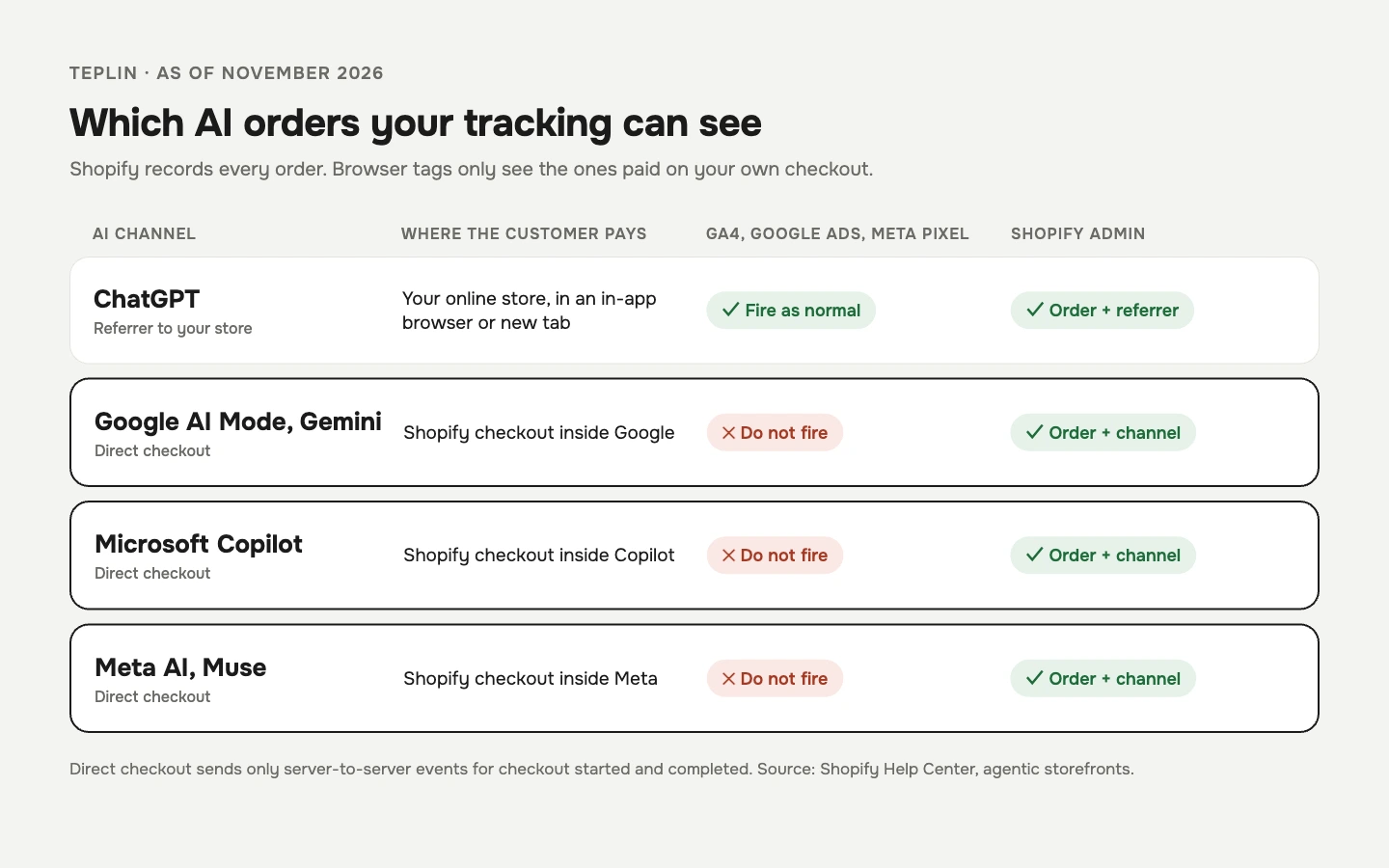
ChatGPT works as a referrer. The shopper finishes on your online store, either in ChatGPT's in-app browser or in a new tab, so your theme, your consent banner and your tags all run. In GA4 these orders usually arrive as referrals from chatgpt.com.
Google AI Mode and Gemini are different. Shopify's page for that channel says it in one line: "Google Analytics and custom pixels won't fire in Google AI Mode and Gemini's direct checkout." The checkout sends only server-to-server events for checkout started and checkout completed. Direct checkout in Google is rolling out gradually to shoppers in the United States, Canada and Australia. Copilot and Meta run the same kind of Shopify checkout inside their own apps, and independent reviews of the setting report the same result there: no GA4, no browser pixels.
"The order exists, the money is real and the customer is yours. The only thing missing is the browser tag that used to tell everyone else about it."
What one store's October looked like
One of the stores on our retainer is a Canadian Shopify Plus brand with an average order above $1,800. Every month we reconcile Shopify orders against GA4 purchase events, because the ad team spends against GA4 and the finance team reports from Shopify. For most of 2026 the gap sat between 6% and 8%, and we could explain every order in it: shoppers who declined analytics cookies, and phone orders the sales team created as draft orders.
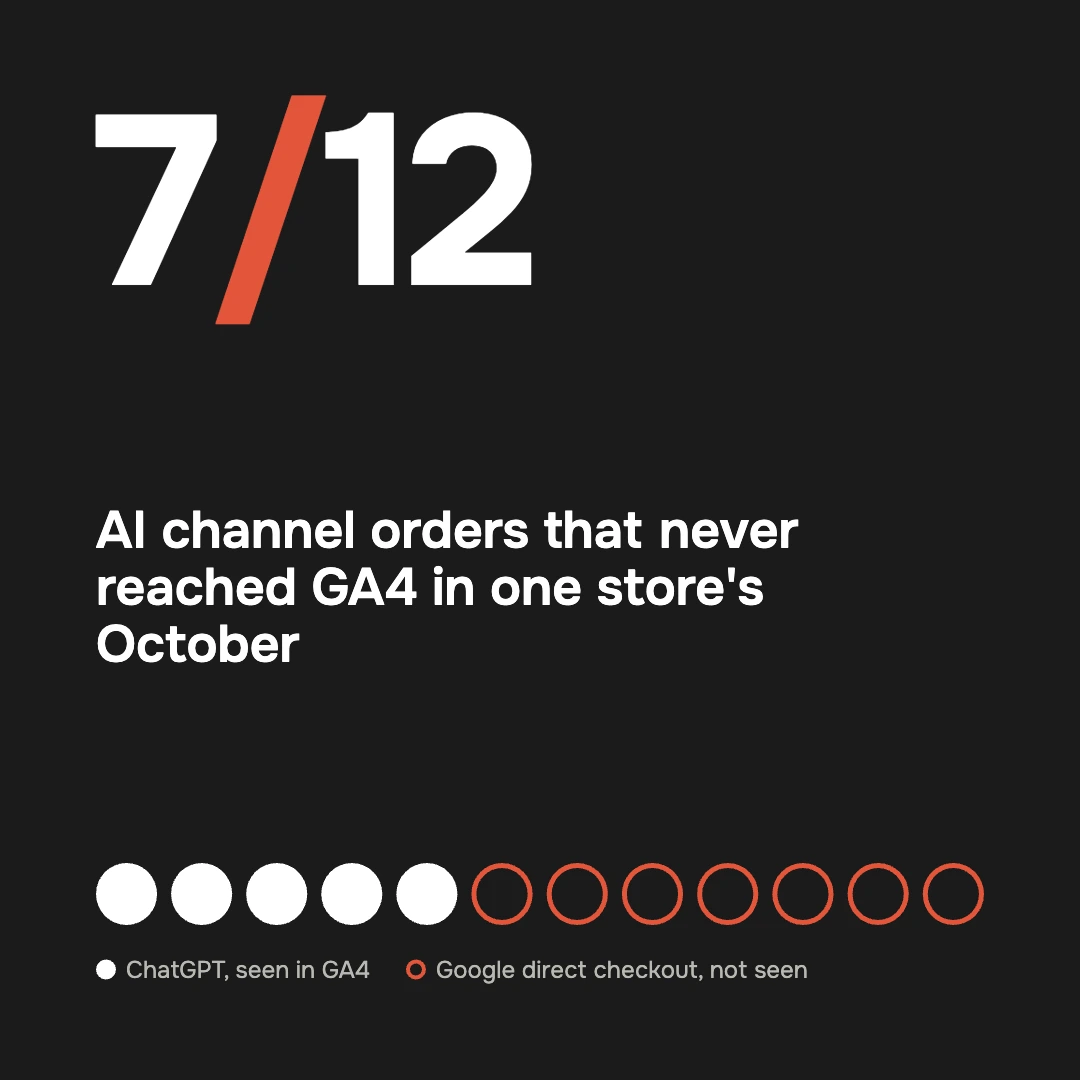
In October the gap reached 9.4%. Between 1 and 31 October 2026 Shopify recorded 286 orders and GA4 recorded 259 purchases. Consent and draft orders accounted for 20 of the 27 missing. The other seven sat in the Agentic report: orders that Canadian shoppers paid for inside Google AI Mode and Gemini, worth $12,900 together. GA4 had no record of them, and neither did Google Ads, which was bidding on some of the same searches.
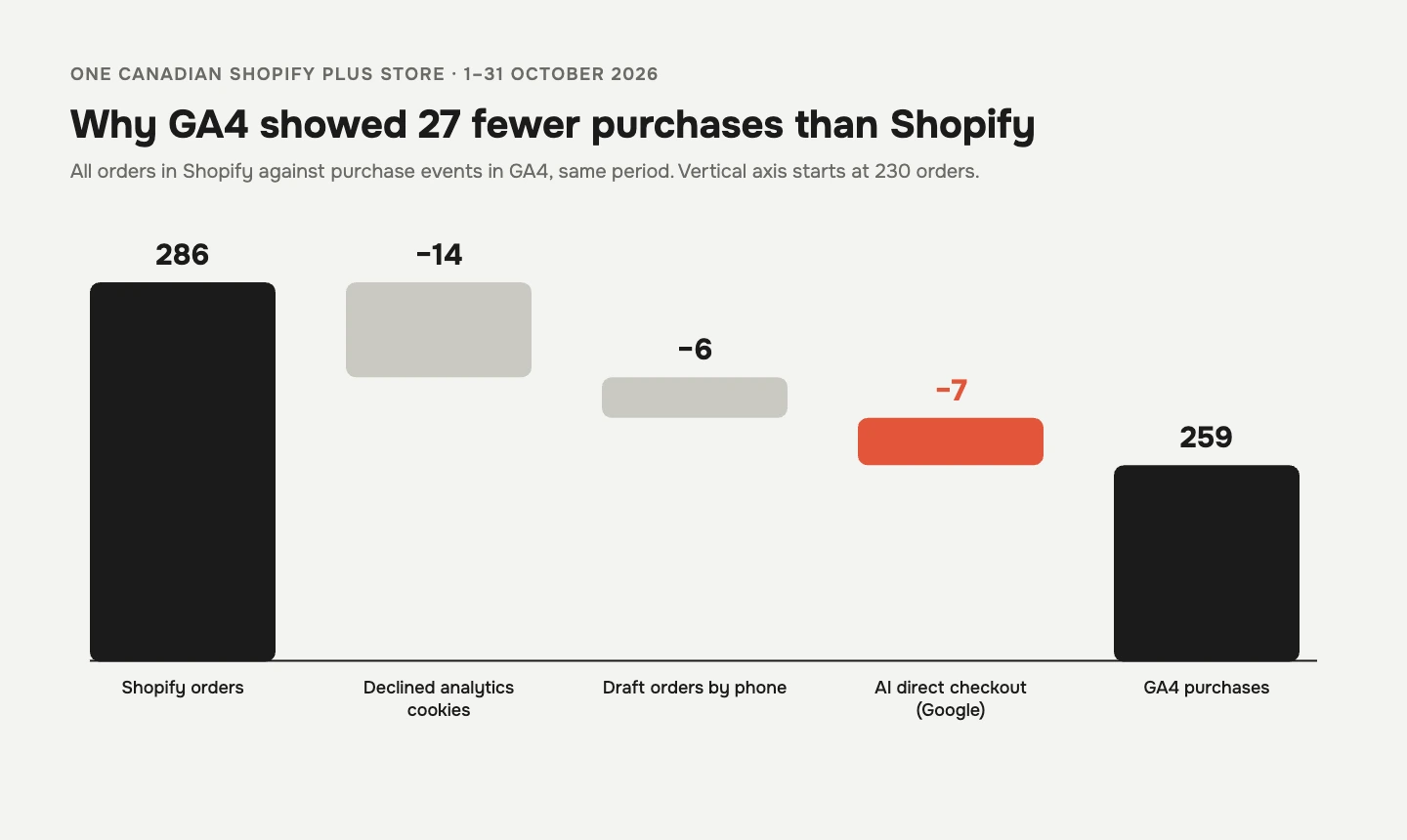
The five ChatGPT orders in the same report were all in GA4, tagged as chatgpt.com referrals. So of 12 orders from AI channels that month, 7 were invisible to every tool outside Shopify.
Before we found this, the store's marketing lead had asked whether the consent banner was broken, and a developer had already spent half a day testing it. Here is what we changed once we knew where the orders went:
- A new line in the reconciliation. Each month we now pull sales and orders per channel from the Agentic page, which also shows online store sessions and conversion, and subtract direct checkout orders before we look for tracking bugs.
- Tagged orders. A Shopify Flow workflow tags every order by its sales channel, so finance and the ad team can filter AI orders in one click.
- Shopify as the source of truth for revenue. The weekly report still uses GA4 for behaviour, but revenue and order counts come from Shopify. The paid team now judges campaigns against Shopify revenue rather than in-platform conversions.
The whole change took about two hours. The October report closed with every missing order explained, and nobody spent another day chasing a tracking bug that did not exist.
Should you turn direct checkout off?
For most stores I would leave it on. Seven orders worth $12,900 in a month is not something to give up for a tidier dashboard, and the shopper who buys inside Google AI Mode would often not have clicked through to your site at all.
There are two cases where I would look harder. The first is a store whose checkout depends on custom logic, such as bundles, gifts with purchase or B2B rules, that nobody has tested in an AI channel's checkout. The second is a brand whose ad budget is set entirely by in-platform conversions and cannot change that before a busy season. In both cases switch off direct checkout for the affected channels rather than the whole feature.
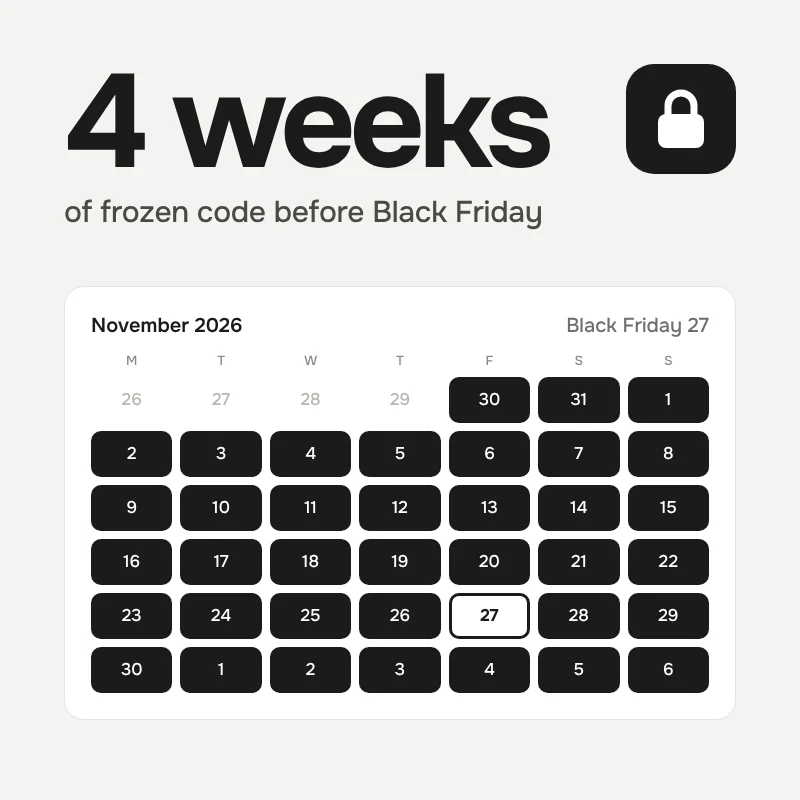
To change it, open Sales channels > Agentic, deactivate "Allow Shopify to manage for me", then adjust Catalog access or Direct checkout channel by channel and save. If you remove products from Shopify Catalog, Shopify says it can take up to seven days before their data stops being shared. With Black Friday on 27 November, decide by the middle of the month. If you run a code freeze like the one we use before Black Friday, treat this as a settings change that still belongs in the log.
Frequently asked questions
Do orders from AI channels show up in Shopify?
Yes. Every order from an AI channel is a normal Shopify order with the channel or referrer attached. The Agentic page in the admin shows sales, orders, online store sessions and conversion for each AI channel, plus total sales across all of them.
Why do ChatGPT orders appear in GA4 when Google AI Mode orders do not?
ChatGPT sends the shopper to your own online store to pay, so your tags run. Google AI Mode, Gemini, Copilot and Meta can take payment inside their own apps through Shopify's direct checkout, where Google Analytics and custom pixels do not fire.
Can server-side tracking recover these orders?
Partly. Shopify's direct checkout sends server-to-server events for checkout started and completed, so a server-side setup has more to work with than a browser tag. Until we see those events arrive reliably in a client's ad platforms, we reconcile against Shopify's order list every month.
If your Shopify and GA4 numbers have stopped agreeing and you want someone to find out why, this is the kind of work our CRO and UX team does every month, and on a Shopify retainer we run the reconciliation for you.
Sources

Get a free Shopify store audit

Stay ahead of the curve

More from our resources
Best Shopify Agencies for Supplement and Wellness Brands in 2026
Ecommerce insights, straight to your inbox


10:33

10:33

16:33